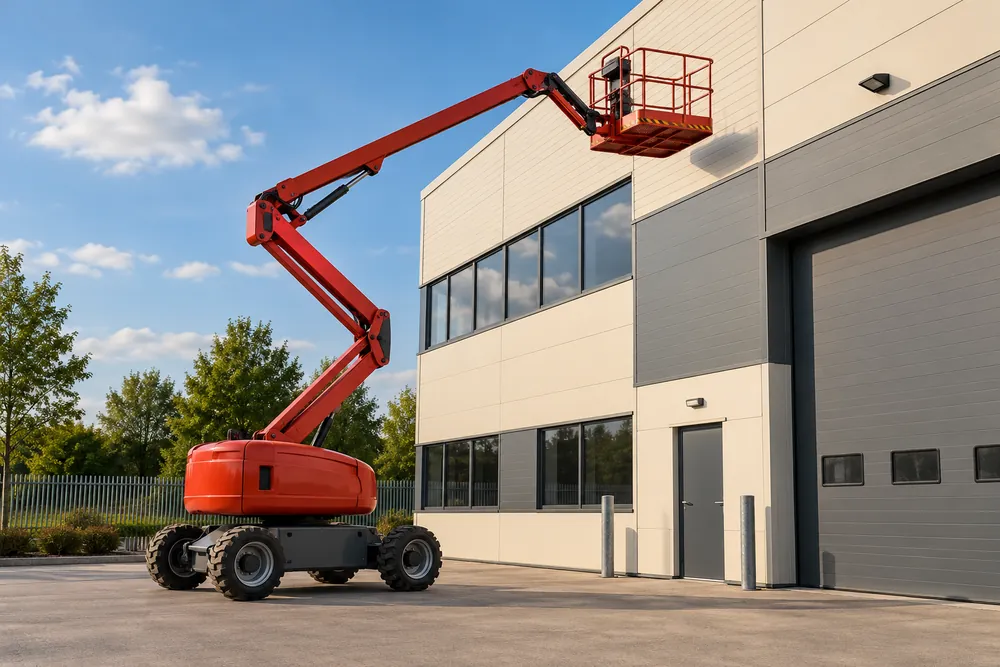
Articulated Or Telescopic Reach
An articulated boom uses hinged sections to move the platform around obstructions. It can be useful above low roofs, plant enclosures or fixed equipment where the base cannot sit directly below the work. The knuckle height and clearance around the boom matter as well as the basket position.
A telescopic boom extends more directly and may suit open areas needing substantial horizontal outreach. Neither type is universally better. Ask the supplier to check the working envelope, the basket load and the actual route of the boom against a sketch or photograph of your work area.
Understanding The Full Working Envelope
The maximum height and maximum outreach shown in equipment summaries are not necessarily available together. Load restrictions and boom configuration can reduce the usable envelope. A complete selection looks at the specific point you need to reach and whether the machine can get there safely.
Consider tail swing, basket rotation and space behind the chassis. These movements can bring parts of the machine into a road, an adjacent work zone or a building. Provide the available footprint rather than only the height of the job, especially on occupied industrial sites.
Power Choice And Surface Conditions
Electric and hybrid boom platforms may suit locations with exhaust restrictions or noise-sensitive working periods. Diesel rough-terrain machines may be considered for suitable outdoor sites. The power choice must fit the site rules as well as the operating hours and charging or refuelling opportunities.
Ground assessment remains necessary for every power type. Slopes, access ramps, underground services and fragile paving can rule out an otherwise suitable machine. Confirm wheel loads and permitted operating conditions for the actual model rather than inferring capability from tyre size or an all-terrain description.
Entrapment And Rescue Planning
Boom work close to steelwork, roof structures and overhead services can create trapping hazards. The risk assessment should address the basket movement and the operator position throughout the task. Secondary guarding may be appropriate, but it does not replace competent operation or a planned working method.
A rescue plan must be practical for the site. Someone at ground level should know the emergency controls, and the plan should address a person who cannot lower the platform normally. Agree access to keys and controls before work starts rather than relying only on external emergency assistance.
What Affects Boom Lift Hire Cost
Working envelope, power type, platform load and hire duration all influence the quote. A larger chassis may need different transport or more space for unloading. Site restrictions, charging facilities and any operator requirement can also affect the proposed arrangement and overall cost.
Ask for transport, collection, fuel or charging conditions and any minimum hire commitment to be explained. Confirm the proposed machine is suitable before accepting substitutions. A different model with a similar height can have a different outreach, weight and set-up requirement that changes the job.
UK Duties And Safe Use
The Work at Height Regulations 2005 require suitable planning, supervision and competence where work at height is involved. PUWER 1998 covers suitability, maintenance and training for work equipment.
LOLER 1998 adds duties for lifting operations and examination. Agree who plans, supervises and carries out each part of the work. Equipment hire does not transfer all site responsibilities to a supplier.
For equipment-specific advice, read the HSE MEWP safety guidance. The final selection and safe system of work must reflect your site and the manufacturer’s instructions.
Planning Your Hire
Locate The Work Position
Give the height, outreach, obstacle height and available standing footprint. Send a photograph showing the whole approach.
Select The Envelope
Review articulated and telescopic options against basket load, tail swing, power requirements and surface conditions.
Control The Work Area
Agree pedestrian segregation, competent operation, restraint requirements and a usable ground rescue plan before the platform is raised.
Boom Lift Hire Questions
Does My Bristol Job Need Boom Outreach Or A Scissor Platform?
A boom lift can position its basket away from the base, while a scissor lift primarily provides vertical access. Choose a boom when the job involves an obstruction or horizontal offset. Choose between models using their working envelopes, loads and ground requirements rather than treating equal working heights as equal capabilities.
Are Harnesses Needed In A Boom Lift?
Boom lift restraint normally involves a full-body harness and a short restraint lanyard attached to a designated anchorage, following the risk assessment and manufacturer instructions. Confirm suitable equipment and user training before work. The arrangement should prevent ejection without allowing the wearer to reach a position where they could fall from the basket.
Keep Planning Your Job
Compare access platform options, check Bristol area coverage or describe your Bristol access job.